

 Synopsis
Review
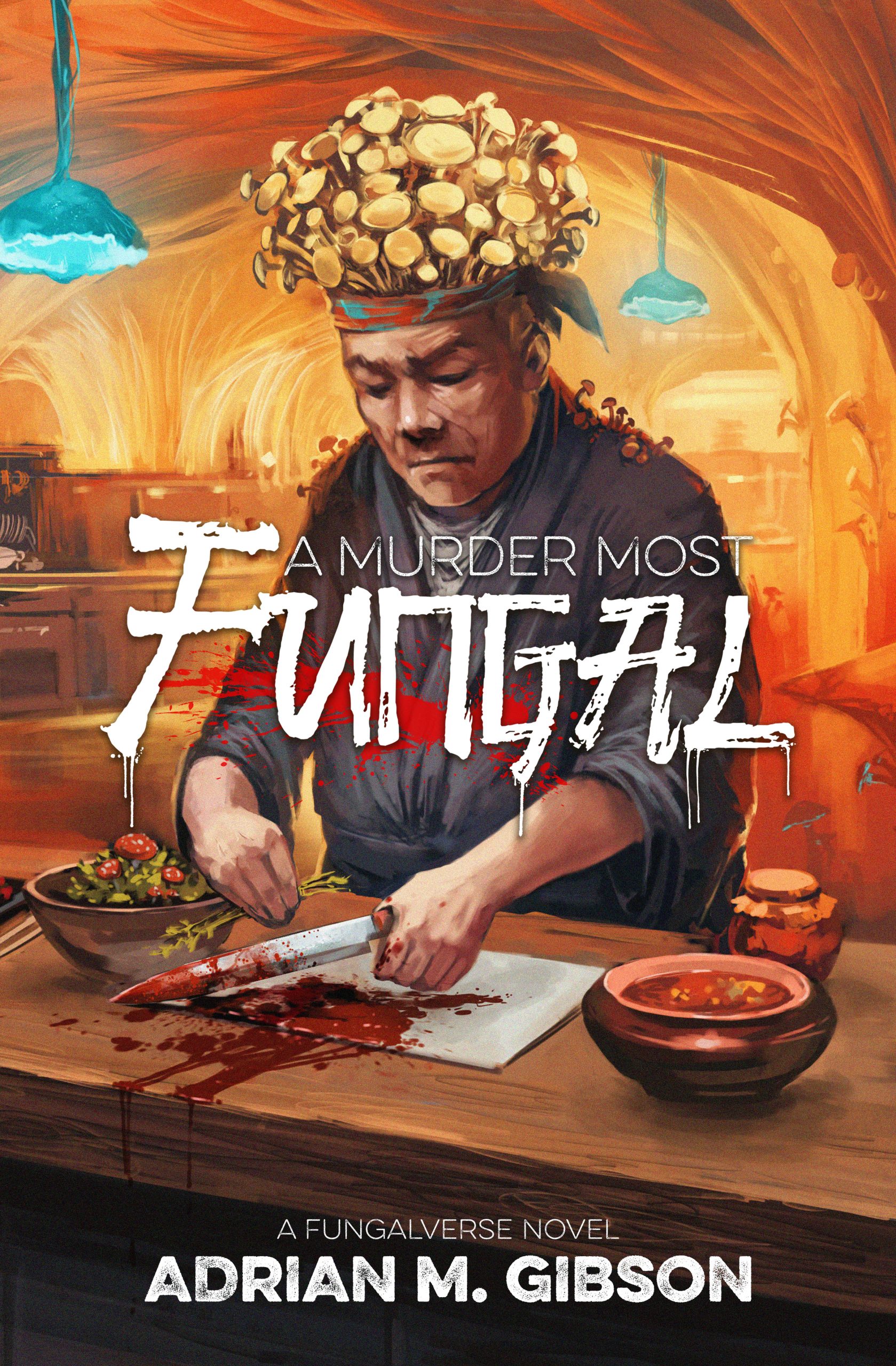
A MURDER MOST FUNGAL is a story about a chef of the Fungal people from the planet Hoppon. He is a well-beloved individual by the military governor, Duncan MacArthur, but despised by a huge chunk of the population as a collaborator. It is not a continuation of the original book in the series, MUSHROOM BLUES, but is set in the same setting a few months after the events of the original novel.
A primer for those unfamiliar with the original novel: Hoppon is a Asian-themed society of human-like aliens who have a symbiotic relationship with a local fungus. They may even be humans. For reasons that remain unclear, a massive war broke out between them and baseline humanity who have since occupied the planet. Human hatred for the fungus folk is barely restrained during the occupation and shortages are many. It reminds me a lot of Bajor in Deep Space Nine even if the leadership is trying to put on a decent face for their annexation.
Our hero, Pocho, finds himself grabbed by criminal forces that immediately begin threatening his sister unless he starts working as a spy for him against MacArthur. As someone who has very little family left, Pocho folds like a deck of cards but their demands are not limited to merely spying on the occupation. No, instead, they want him to be part of a suicidal assassination plot.
Pocho is a well-written character who just wants to get along after the dramatic invasion of his country as well as subsequent subjugation. He wants to look after his kitchen staff and the fact that he’s managed to get the patronage of a rich offworlder has made things easier. Unfortunately, that just makes things worse as the genuinely ungrateful people around him take his help while spitting on him without.
The is perhaps my only issue with the book: everyone but Pocho is a complete scumbag whether the racist colonialists occupying the world or the people who treat Pocho like garbage. I really wanted Pocho to stand up for himself and even his decision to work against the occupation is undermined by the fact the so-called resistance is so repulsive. This is definitely a book with no good guys.
Adrian M. Gibson does a fantastic job realizing the culture of the Hopponese. The mushroom people are definitely Asian coded but unique in their own ways. We also get some more insight into the war that resulted in their horrific defeat as well as hints that something triggered the disproportionate human response. Was it an accident or a deliberate attack? We’ll never know (at least in this book). It does, however, provide a fascinating series of flashbacks.
Food is a huge focus in this book and the various dishes created for the story are a major part of the books appeal. It’s about as far from the cop mysteries of the original book as possible and is more like a family drama. Adrian M. Gibson did an amazing job realizing the various flavors and ingredients that make Pocho’s particular craft into art.
In conclusion, this is a good book that continues to expand upon the Hoffman Report’s world and encourages me to check out the anthology that is set in the world. Clearly, the conflict between the humans and Hopponese has a lot of legs to tell interesting stories of alienation during a afterwar situation.


