“THE WOLVES OF WAR ARE BARING THEIR FANGS”
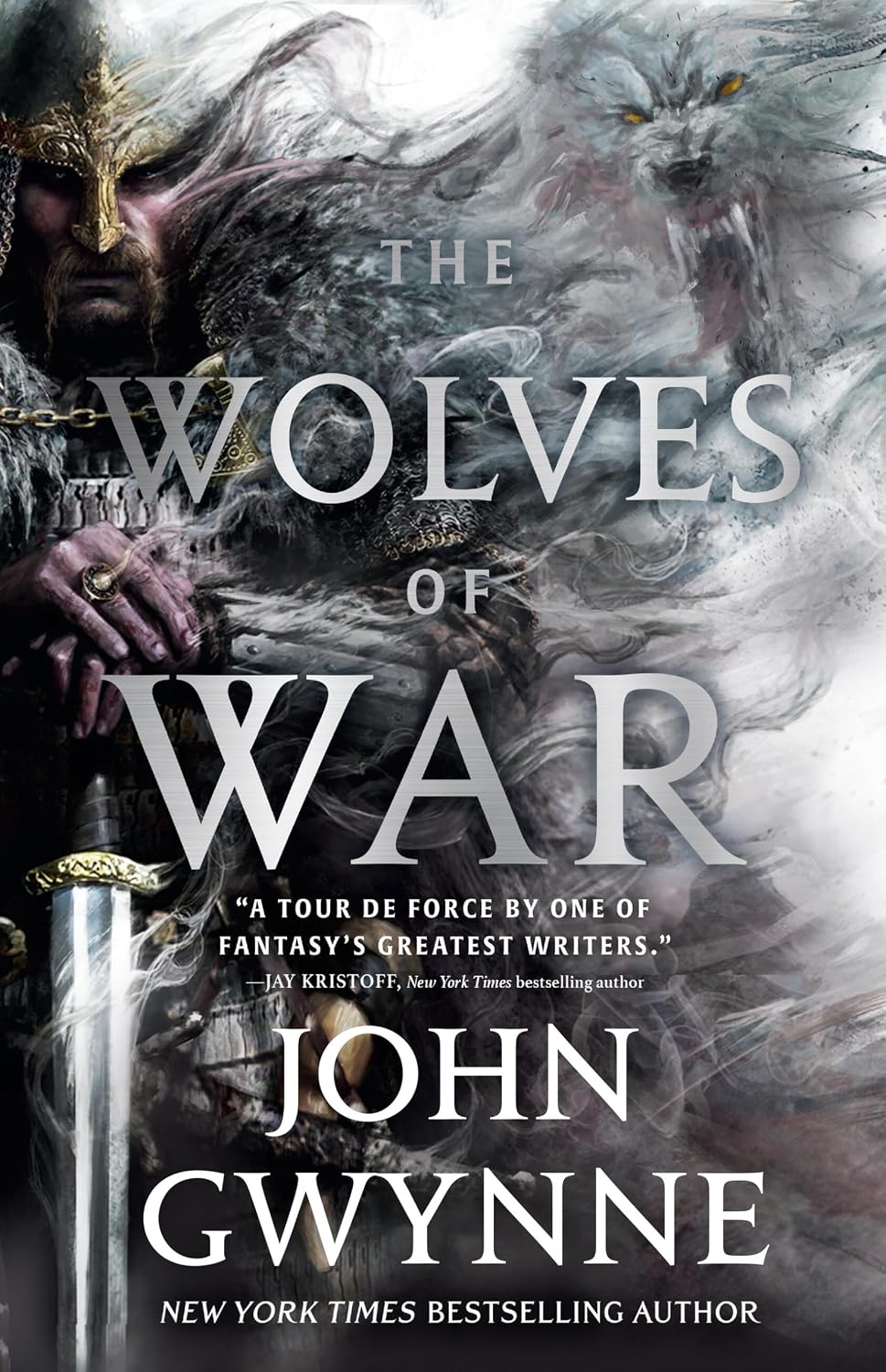
 John Gwynne has long proven himself to be an absolute master at writing epic heroic fantasy with a tender human heart, but The Wolves of War takes that to the next level and is undoubtedly his most personal and intimately vulnerable work yet. I do have to admit that this might work better as a love letter to his own family than as a particularly strong Slavic fantasy in its own right, but there’s so much heart hidden in these pages that I still couldn’t stop myself from devouring the whole thing in just two days.
Now, if you’ve been following Gwynne for a while, you’ll probably know that the inspiration behind The Wolves of War was his late daughter, Harriett, who is embodied by Halia in the story. To me, she was the absolute shining light of this book for me, and experiencing her disability through her eyes, particularly her internal frustration over her physical limitations and the way outsiders perceive and judge her for it, absolutely broke my heart while also making me admire her beyond belief. She is genuinely the most beautiful, pure soul in this entire story, and I found myself becoming just as fiercely protective of her as her loving family was.
I was also completely enthralled by her blossoming magical abilities, which gave me almost Wit-bond vibes from Robin Hobb’s Realm of the Elderlings, and I loved how her special connection with the family’s snarky domovoi, Root, added so much levity into the story. What I appreciated most, though, was that her magic doesn’t magically cure her disability or erase the difficulties she faces, but instead it gives her an escape, a sense of freedom, and, most importantly, a degree of agency that she so desperately wants in her everyday life. I thought that was such a beautiful and meaningful choice, and honestly, I could have spent the entire book following Halia around and watching her discover more about herself and her powers.
Unfortunately, Halia was also such a strong character that she completely overshadowed everyone else in The Wolves of War for me, and that lack of personality made most of the dialogue feel a bit contrived and hollow to me. And don’t get me wrong, I did like seeing her through her father Ivan’s eyes to realise that she is even more loved and cherished by her family than she probably understands herself, but the other two POVs of Dagmar and the rather antagonist-ish Ingvar, never quite managed to pull me in. And this is where my feelings become a little complicated, because I genuinely think I would have preferred a much more intimate family saga centred around Halia, her inner conflicts, and the hurdles that she and her family have to overcome together instead of going bigger.
The introduction of war, political conflicts, and external threats didn’t really do much for me no matter how skilled Gwynne is at writing those aspects, and I actually felt that the action took away from the emotional development of almost all of the characters. And yes, knowing the personal experiences and the people who inspired this story undoubtedly added a bit of an emotional layer for me, but I don’t think that should be a prerequisite for a story to hit as hard as it wants to. I wanted to feel more invested in the wider narrative on its own merits, and that connection just never quite materialised. Which is truly a shame, because there is simply no denying that Gwynne is a bloody good storyteller.
The worldbuilding was probably what kept me most grounded whenever the narrative lost me a little, because the Slavic folklore and historical richness are truly wonderfully immersive. There are also some really strong horror elements woven throughout The Wolves of War, and I honestly found all the terrifying creatures drawn from myth and legend considerably more compelling threats than the warmongering and political squabbling. Especially Halia’s unique role in confronting these supernatural horrors took me by surprise in the best way, and I loved seeing her powers become such an important part of the story.
Now, there were some big, bold swings in those final chapters that I probably could and should have seen coming, but that didn’t stop them from hitting me in the feels more than I had expected. I think this is where the emotional core behind the story really shines through, because you can just feel how much of Gwynne’s own heart and hurt has gone into these pages. I did feel a bit conflicted about a certain trope being discussed at the end, but somehow that has only made me more curious to see where things will go in the conclusion to the Wolfheart Chronicles.
Ultimately, I honestly feel like an absolute cold-hearted bitch for not loving this story as much as I desperately wanted to, but I am totally willing to accept that it’s a me-problem instead of a book problem. This might not be my favourite John Gwynne book, but I do think it’s his most refreshing and emotionally raw one, and there’s so much heart in it that I find it difficult not to love what it represents. At its heart, The Wolves of War is a tender story about family, disability, love, and finding your own strength in a world that doesn’t always make room for you, and I’d absolutely recommend it if you’re looking for a fantasy that is both utterly epic and tragically, beautifully human.
Thank you to Netgalley & Orbit UK for providing me with an eARC in exchange for an honest review, all opinions are my own. Wolves of War is scheduled for release on 3 November, 2026.