

“The Speculative Fiction Indie Novella Championship (SFINCS, pronounced “sphinx”)a is a yearly competition to recognize, honor, and celebrate the talent and creativity present in the indie community. We are a sister competition to both SPFBO and SPSFC, and we highlight greatness in the novella format in all areas of speculative fiction (fantasy, science fiction, horror, etc.).” – From the official SFINCS website.
Note: The following review contains only my personal thoughts as a judge and does not reflect the views of the team as a whole.
REVIEW
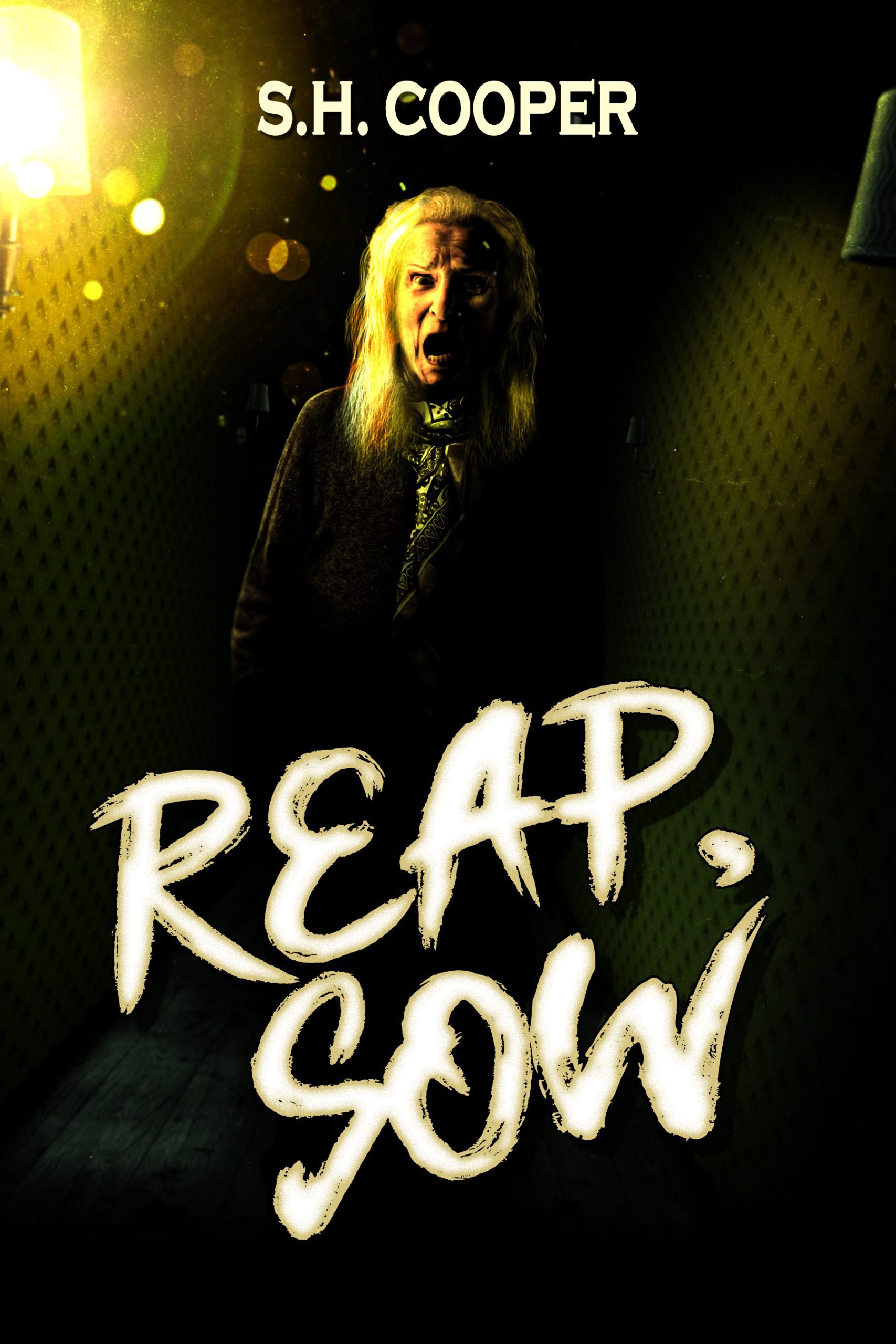
It’s been a good year for horror in SFINCS. S. H. Cooper’s Reap, Sow, which also made this year’s Stoker Awards preliminary ballot, is a fine example. Voicey and crisply written, Reap, Sow is a work of psychological, dreamlike horror that combines the themes and uneasiness of Jacob’s Ladder with the textured sense of place found in Ania Ahlborn’s Brother. It’s a fast read, and a good one to try if you’re intrigued by horror, but wary of anything too gory. While the threat of violence pervades the novella, Cooper’s focus is on story and atmosphere over gore for the sake of it.
There’s a lot at the start of Reap, Sow that’s left deliberately (and geographically) opaque. When we meet our first-person protagonist, Lucky, she’s lost in what feels like a dark dreamscape. Gradually, that darkness is interrupted by bursts of memory: visions of butchers’ chains hanging from ceilings, her rural family in the kitchen, a close friend and lover, a sinister old woman. As the story continues, these fragments expand, stretching to fill the gaps in Lucky’s recollections, and alongside Lucky, we begin to piece together what’s happening and who she is. The more Lucky and her audience learn, the more immediate the events surrounding her become, until we’re thrust into what feels like present action. The climax is explosive. Genre markers suggest one possible direction the plot could go, though ultimately Cooper surprises when it comes to the fine details. Although Reap, Sow, isn’t quite historical horror, it has that texture, that weighty sense of place and of the pressure of the past upon the present, that I tend to associate with the subgenre.
All I recall is evergreen and knotted wood. It hurts my head, trying to remember more.
Much of what makes Reap, Sow work is its sense of atmosphere and character, something deftly supported by Cooper’s prose. Right away, we’re not reading about Lucky, but immersed in the same shadowy world as Lucky. Moments and images come fast, yet linger, and there’s a careful simplicity to the writing that adds to the realism of Lucky’s characterization. At times, this gives the effect of a younger narrator, adding to her sense of vulnerability, and compounding the audience’s own worries for Lucky’s safety. At turns childlike while propelled by a deep sense of grief and guilt, she’s a character rushing from moment to moment without a safety rail or any kind of guiding force. If moments of security or relief come to her through the appearance of her beloved mother (or the disappearance of her hostile father), they’re disrupted as often as not by the intrusion of what we come to realize is Lucky’s world turned weird. Features of the farm Lucky has been raised on warp around her, while the family she knows and loves appear not as her supporters, but as aggressors. As the layers of Lucky’s background peel away, we’re constantly waiting for a disturbing reveal–is there more than meats (!) the eye to Lucky’s home (and the animal husbandry of the farm)? Just what has happened to her that she now occupies this half-world in which her family threatens her? Certainly, a sense that Lucky herself may be guilty of some terrible crime seeps from the page, underscored, perhaps, by the title.
While I did find the novella’s major twist predictable (I think I was around five pages in when I guessed it), there’s still much to explore when it comes to the rest of the context of the world Lucky inhabits. Figuring out the larger puzzle piece earlier on doesn’t denude the rest of the work of meaning, arguably enriching both the horror and pathos of the page. That said, I do suspect Reap, Sow would benefit from a tighter middle in order to sharpen its delivery in places and really emphasize some of the stronger images Cooper crafts in its middle sections.
It’s clear from its opening onwards that Reap, Sow is a book with a clear vision and perspective, and I enjoyed my time with it. The writing is clean and clear, which lends the novella’s more dreamlike moments an essential deliberateness. There’s also a lot, I feel, that’s valuable about how Cooper deploys the fantastic in service to a conversation about the real. As a mechanism, it’s used here to good effect.
Whether you’re new to horror, or an old hand, this one’s worth looking at.
Add Reap, Sow on Goodreads.
Purchase Reap, Sow from Bookshop.org.


