


A deeply unsettling novel about trauma, voyeurism, faith, and the terrible question at the center of every possession story
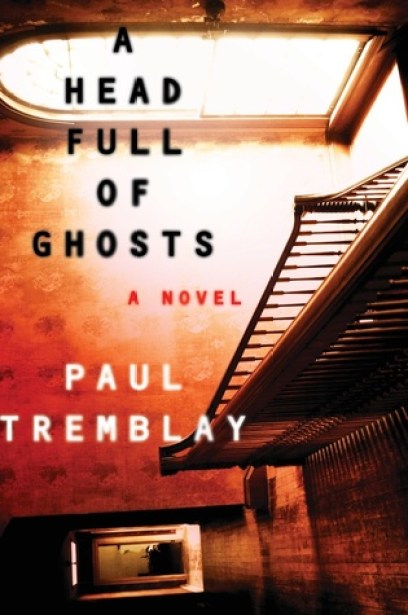

“Ideas. I’m possessed by ideas. Ideas that are as old as humanity, maybe older, right? Maybe those ideas were out there just floating around before us, just waiting to be thought up. Maybe we don’t think them, we pluck them out from another dimension or another mind.”―
Paul Tremblay, a head full of ghosts
About
The lives of the Barretts, a normal suburban New England family, are torn apart when fourteen-year-old Marjorie begins to display signs of acute schizophrenia.
To her parents’ despair, the doctors are unable to stop Marjorie’s descent into madness. As their stable home devolves into a house of horrors, they reluctantly turn to a local Catholic priest for help. Father Wanderly suggests an exorcism; he believes the vulnerable teenager is the victim of demonic possession. He also contacts a production company that is eager to document the Barretts’ plight. With John, Marjorie’s father, out of work for more than a year and the medical bills looming, the family agrees to be filmed, and soon find themselves the unwitting stars of The Possession, a hit reality television show. When events in the Barrett household explode in tragedy, the show and the shocking incidents it captures become the stuff of urban legend.
Fifteen years later, a bestselling writer interviews Marjorie’s younger sister, Merry. As she recalls those long ago events that took place when she was just eight years old, long-buried secrets and painful memories that clash with what was broadcast on television begin to surface–and a mind-bending tale of psychological horror is unleashed, raising vexing questions about memory and reality, science and religion, and the very nature of evil.
My Thoughts
A Head Full of Ghosts is about the familial strife within the Barrett family. The mother is distant and frustrated. The father is teetering on the brink of religious zealotry. The younger sister, Merry, is both caught up in the chaos and separate from it because of her age and innocence. And then there is Marjorie, a fourteen-year-old girl who may or may not have a head full of ghosts. The story covers the short stretch of time leading up to Marjorie’s exorcism. Yes, I said exorcism. A Head Full of Ghosts is not your typical ghost story. It is a horror novel, yes, but it is also a story about psychological trauma.
“On the morning of the exorcism, I stayed home from school.”
The novel contains many of the familiar elements of a possession story. There are plenty of nods to The Exorcist, arguably the most famous possession tale in horror fiction and film. Like The Exorcist, Marjorie vomits, spews profanities, makes inappropriate sexual comments, speaks in dark and sinister voices, and levitates. And, just like The Exorcist, these acts terrify the people around her, frightening them to the point of madness.
The difference between The Exorcist and A Head Full of Ghosts is that while Marjorie’s actions are terrifying, we are never entirely sure what is happening. As readers, we are never able to make a decisive call on whether she is haunted or not, because Tremblay plays everything very close to the chest. He stages every scene both ways. Is Marjorie suffering from an extreme mental illness? Or is she a child invaded by an unearthly demonic presence?
“Ideas. I’m possessed by ideas. Ideas that are as old as humanity, maybe older, right? Maybe those ideas were out there just floating around before us, just waiting to be thought up. Maybe we don’t think them, we pluck them out from another dimension or another mind.”
The story is told mostly through the eyes of an adult Merry, now a somber woman living a quiet life off the earnings of the television show made about her family. Marjorie’s suffering was televised for mass consumption. Television is not truth. That fact adds another layer of unease to the original story of what happened to Marjorie. Merry meets with a writer who wants to turn her childhood experiences into a tell-all book.
The novel moves back and forth between the recollections of the older, wiser Merry and the younger Merry, who sees everything through the limited lens of an eight-year-old. The memories are painful for her to revisit. Because she is an unreliable narrator, and because children often see what they want to see, we experience most of the horror through a child’s understanding of monstrous events. Merry speaks candidly about the experiences that tore her family apart and were packaged for television, but she is also clear that these are her memories, and memory is slippery.
“I sneak into your room when you are asleep, Merry-monkey. I’ve been doing it for weeks now, since the end of summer. You’re so pretty when you’re asleep. Last night, I pinched your nose shut until you opened your little mouth”
At the beginning of the novel, Marjorie has already begun acting out. There is strain and tension between the girls’ parents. When someone in a family has a breakdown, it naturally puts pressure on everyone around them, especially the parents, who both want what is best for their child. But what is “best” looks very different to Merry’s mother and father. Her mother wants Marjorie to see psychiatrists and begin medication. Her father wants Marjorie to turn to the church and ask God for help.
As events escalate and the family sinks into severe financial hardship, they agree to televise Marjorie’s exorcism and the psychological trauma surrounding it. This pain will be televised.
“After your performed the exorcism, how did you know that demon wasn’t still in there, hiding? How do you know it didn’t go in a hibernation state, quieting down to come out later, years and years later when no one would be around to help? Hey, how do you know if the wrong spirit left? What if you expelled the person’s real spirit and only the demon’s spirit was there to take its place? If I believed in any of that stuff, I’d be afraid that was going to happen to me.”
There is something gross and consuming about the voyeurism the audience participates in, and that includes the blogger, the reviewer, and the reader. The cut-ins from the horror blogger, while initially jarring, play an important role in the narrative. What is truth? What even is a ghost story? Merry does not give us the truth. The reality show does not give us the truth. And neither does the speculation of a random horror blogger. So what the hell happened?
Everything could be true, or all of it could be a lie.
Beyond the terrifying scenes of vomit, gore, and bodily horror, the book keeps circling back to the same central question: what is actually happening here? I spent much of the novel wanting to scream, please, someone help this child. But the adults in the room all seem to want to harm her in different ways. Is abuse acceptable if the goal is saving a child’s soul? Or is Marjorie faking the whole thing for attention? Is she mentally ill? Is she possessed? We never truly know.
“There’s nothing wrong with me, Merry. Only my bones want to grow through my skin like the growing things and pierce the world.”
A Head Full of Ghosts is, in many ways, about perception. What is horror to one person is entertainment to another. What looks like psychological trauma to one person becomes evidence of demons to someone else. At the center of it all is either a confused and terrified girl or a master manipulator. The novel works in layers, one on top of another. Tremblay shows serious skill in crafting something this meta, unsettling, and psychologically slippery.
And then there are the visceral scenes, which are genuinely terrifying. Tremblay spaces them through the novel the way one might sprinkle salt into food. He never lets the reader get comfortable or numb to the violence. The horror arrives suddenly, like a balloon popping beside your head. He never lets you forget that yes, this is a psychological and meta horror novel, but it is also written by someone who knows exactly how to deliver gore and make it land.
I felt trapped by this story in an ethical and psychological spiral that can never really be resolved. The novel ends, but there is no final satisfaction, and that absence becomes its own form of horror. Horror of the mind. Horror of feeling. Horror of rationality. Horror of spirit. We, as readers, are implicated in the voyeurism, consuming Marjorie’s descent page by page. If you read this, you may not come away satisfied. But it is a brilliant and compelling story. Its ideas cling to you like a barnacle you cannot scrape off without drawing blood. That alone makes it worth the price of admission.
Was she or wasn’t she? We will never know, but damn is it an interesting book to read.
Check Out My Other Reviews
Review – Battle Ground by Jim Butcher (Dresden Files #17)
Review – The Ikessar Falcon by K.S Villoso